Ducts, vents, flue pipes – all are sheet metal. It’s the flexibility and durability of sheet that make it ideal for shaping and constructing various HVAC components.
But what kind of sheet metal makes HVAC vents? What’s the right sheet metal thickness for HVAC ducts? This guide addresses every aspect of HVAC sheet metal fabrication, covering all common queries in detail.
What is sheet metal in HVAC?
The HVAC system comprises of three sub-systems: heating, ventilation, and air-conditioning. The airflow across these systems takes place through ducts.
The ducts that channel air, vents that allow airflow, and flues that let out exhaust gases – all are usually made of sheet metal.
What is fabrication in HVAC?
Fabrication in HVAC means the manufacturing of various interlinking components in the system.
Besides sheet metal parts like ducts, vents, flues, and plenums, fabrication also means making furnace casing, coil assemblies, air handle units, and insulation panels.
What type of sheet metal is used for HVAC?
HVAC rigid ducts can be made from either galvanized sheet or aluminum sheet metal.
Galvanized Steel

Galvanized steel is the common choice for most HVAC ductwork due to its durability, corrosion resistance, and cost-effectiveness. The galvanized steel used in the HVAC systems meets ASTM A653, with a coating of G90 specifications.
It is quite popular in residential, commercial, and industrial HVAC systems due to its robust nature and cost efficiency.
Aluminium

Aluminum is another popular material for HVAC ductwork, particularly in sensitive environments where moisture resistance and cleanliness are critical.
Aluminum is best for clean rooms (ideally ICUs in hospitals), moisture-laden air systems, special exhaust systems, and ornamental ducts. This galvanized aluminum has to meet ASTM B209, alloy 1100, 3003, or 5052 specifications.
How are HVAC ducts made?
HVAC ducts can be made from plastic or galvanized sheet metal.
Sheet Metal Cutting
First, the sheet metal is cut into the required size using a shear or plasma cutter.
Roll Forming
Next, the metal is shaped into the desired form using a roll-forming machine. The shaped pieces are then connected using screws, rivets, or welding.
Sealing and Insulation
To prevent air leaks, sealant or tape is applied to the joints. Lastly, insulation is added to reduce heat loss and noise.
Is HVAC sheet metal galvanized?
Yes, the sheet metal is galvanized for use in the HVAC system. Galvanization is the process of adding zinc coating to steel to prevent it from rusting. Galvanization is necessary because it provides:
Environmental Protection
The zinc coating acts as a barrier against moisture and oxygen – the primary cause of rust in steel. This added layer of protection extends the lifespan of the HVAC sheet metal by making it more resistant to environmental elements.
Durability
Galvanization makes the metal resistant to physical wear and tear, impacts, and minor abrasions. This ensures the ductwork remains intact and functional over long periods.
Cost Effectiveness
The initial cost of galvanized sheet metal may be higher than non-galvanized options, but it is cost-effective in the long run. The protective zinc coating reduces the need for frequent maintenance, leading to significant savings over time
Ease of Inspection
The zinc coating is easily visible, which makes it simple to inspect and assess the condition of the sheet metal.
How many types of ductwork in HVAC?
Ducting is available in various types (flexible and rigid), and the best type depends on your specific needs.
Rigid HVAC Ducts
Among the duct types, sheet metal ducts are considered the best. Being made from galvanized steel or aluminum, they are non-porous, which prevents mold and bacteria growth. This type of ducting ensures cleaner air and minimizes health risks associated with mold and fiberglass particles.

Fiberglass-lined ducts are similar to sheet metal ducts but feature an added layer of fiberglass insulation on the inside or outside. This insulation prevents heat loss and dampens sound, which makes them a popular choice in commercial buildings and offices. However, the sealed interior lining can trap contaminants, and make cleaning a challenge.
Flexible HVAC Ducts
Flexible ductwork is a good option if you have limited space. They are made from a metal wire coil covered with flexible plastic, which makes their installation easier.
What equipment is used in sheet metal fabrication?
Sheet metal fabrication involves the use of several machines that cut, shape, and assemble metal components. Here’s a list of some important ones:
Shearing Machines

Shearing machines, also known as plate shearing machines, cut sheet metal into specific sizes. There are available as gantry shears, hydraulic shears, and rolling shears – each one can handle various thicknesses and types of metal.
Press Machines

Press machines, including punch presses, can cut and form sheet metal. By changing the mold structure, these machines can perform cutting, punching, blanking, and bending. They are essential for creating complex shapes and features in metal sheets.
Rolling Machines

Rolling machines, or plate rolling machines, bend flat metal sheets into cylindrical or curved shapes. The machines feature rotating rollers that apply pressure and bend the metal. This is crucial for making cylindrical components like pipes and tubes.
Flanging Machines

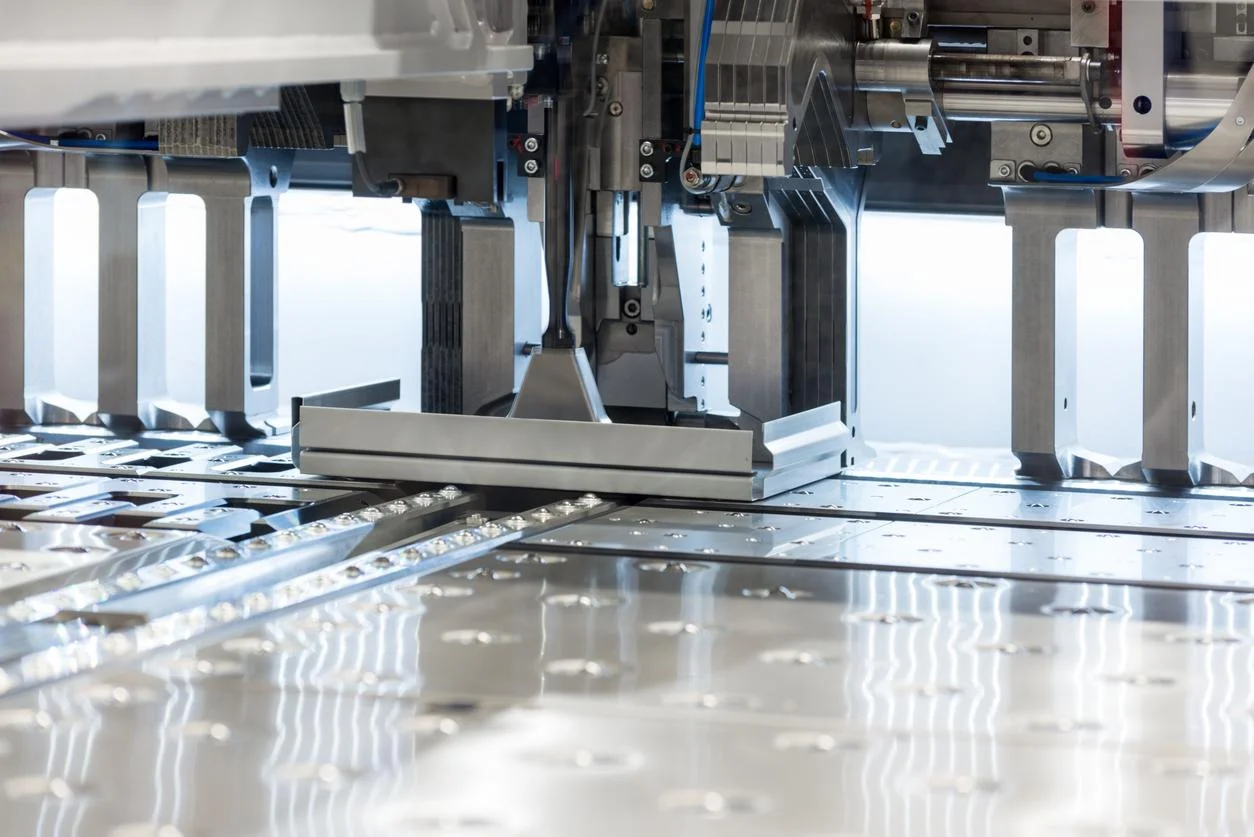
Flanging machines, also known as folding machines, bend and fold sheet metal along straight lines to create angular corners. This is essential for forming edges and flanges on metal parts, which are needed for assembly and structural integrity.
Drilling Machines

Drilling machines are for creating holes in solid metal workpieces to secure rivets, screws, or other fasteners. These machines come in as bench drills, radial arm drills, and handheld electric drills. They are essential for making holes for rivets, screws, and other fasteners.
Grinding Machines

Grinding machines remove burrs and protrusions from metal surfaces. With high-speed rotating grinding wheels, these machines ensure smooth and precise finishes on metal parts, which is important for aesthetic and functional purposes.
Gas Welding and Cutting Equipment
Gas welding and cutting equipment use high-temperature flames generated from a mixture of acetylene and oxygen gases to cut and weld metal. This equipment is useful for cutting thick metal plates and welding sheet metal components together.
What are the three main HVAC fabrication techniques?
HVAC fabrication involves several critical techniques to transform raw materials into functional components for heating, ventilation, and air conditioning systems. The three main techniques are: cutting, folding, and welding.
Cutting
Cutting is the first step to extract the precise shape and size from raw sheet metal. This technique includes methods like shearing, sawing, and advanced technologies like laser cutting.
Folding
Folding shapes the sheet metal along straight lines to achieve specific angles or forms. It creates the various bends and angles required in ductwork and other HVAC components.
Welding
Welding joins the sheet metal pieces (two or more) by melting their sides and fusing them. This technique is useful for assembling HVAC components that need to withstand high stress and provide airtight seals. MIG (Metal Inert Gas) welding, and TIG (Tungsten Inert Gas) welding, are common in HVAC sheet metal fabrication.
What gauge sheet metal for the HVAC duct?
The sheet metal gauge for HVAC ducts varies based on size and airflow needs. The minimum gauge is 28 (0.47mm).
Here’s a list of sheet metal gauges, respective to duct sizes:
| Sheet Metal Gauge | Duct Size (mm) |
| 26 | Under 300 |
| 24 | 350 to 750 |
| 22 | 750 to 1200 |
| 20 | 1200 to 3000 |
What is the thickness of sheet metal for HVAC?
In HVAC, the thickness of sheet metal is listed in terms of gauge. The thickness can range from 0.4mm to beyond 1mm, depending on duct size, material, and airflow requirements.
The table below showcases the thicknesses of galvanized steel and aluminum:
| Gauge | Galvanized Steel (mm) | Aluminum (mm) |
| 20 | 1.006 | 0.813 |
| 22 | 0.853 | 0.643 |
| 24 | 0.701 | 0.536 |
| 26 | 0.551 | 0.404 |
| 28 | 0.475 | 0.32 |
What standard is used in HVAC?
In HVAC, the ANSI/SMACNA 006-2020 standard guides sheet metal fabrication. It details duct design, all sizes, design airflows, pressure classes, and routing. It even lays out the design of duct supports.
What type of metal is ductwork?
Only two types of metal are popular in ductwork: galvanized steel and aluminum. Galvanized steel is known for its durability and resistance to corrosion. While Aluminum is popular due to its lightweight and non-corrosive properties.
What is the Best HVAC ducting?
The best HVAC ducting is typically made from sheet metal, specifically galvanized steel, because of its durability, ease of cleaning, and resistance to mold. Sheet metal ducts provide a long-lasting, reliable option for most residential and commercial HVAC systems.
What is the maximum length of a duct?
According to AMCA, the 100% effective duct length is a minimum of two and a half times the duct’s diameter for outlet velocities up to 2,500 fpm.
Duct Length = 2.5 x D(<2500 fpm)
If that goes beyond 2,500 the calculation changes:
Duct length = fpm/1000 x D
The duct diameter is calculated as
D = 2wh / (w +h)
Where h is the duct height and w is the duct’s width.