Go anywhere on a factory floor, and you’ll find carbon steel everywhere, and few people take the time to look at the brackets, frames, shafts, and housings that hold everything together. It is not as flashy as titanium or Inconel, and it’s not as much a part of marketing as those materials are. But it is the material that is doing the most work in the widest variety of applications, and it is the material that is cheap and machines easily. It is amanuble to withstand the normal loads without going to any special lengths.
The part that gets people wrong is not whether or not to use carbon steel. It is getting the right grade, tolerance, hardness, and rust protection for what the part is actually being used for. If you get one of those wrong, the part will be more expensive, or it will fail earlier than it should.
Which is the best grade to use, Cold Rolled, Hot Rolled, or Medium Carbon?

탄소강 isn’t one material. The grade alters the part’s capabilities, and the wrong grade is one of the more frequent errors on a spec sheet.
The things such as SPCC, SPCD, and the DC01 through DC06 series are cold rolled grades, which are designed for forming. They are easily bent and welded, making them a favorite choice for brackets, chassis parts, and other structural components. The problem with cold rolled steel is that it has no inherent rust protection and must always be coated after machining.
Hot rolled steel is used when thickness and raw strength are more important than formability. Grades such as Q235B, Q345B and SS400 are used for equipment frames, bases, and heavier structural components that require load-bearing without resorting to a more expensive alloy. It oxidizes slightly faster in storage than cold-rolled steel, so surface treatment is not optional here either.
When a part must have some wear resistance, use medium carbon steel, and in particular grade 1045 and a manufacturing company like FST 메탈스 that machines all three grades in-house can be a good choice for outsourcing. Examples of such items are shafts, gears, and mold bases. When quenched and tempered, 1045 is usually in the HRC 28 to 32 range and will not become brittle with repeated rotation or contact. It also cuts at a steady rate of 80-120 meters per minute, which is not as slow as harder steels.
Although it reacts differently, spring steel, such as 65Mn, should be included in this list. Clips, circlips and retaining springs must bend and unbend repeatedly, and this grade is designed for just that. It tends to spring back during forming, which must be taken into account in the tooling design.
What is the tightest tolerance that can be achieved with carbon steel?

Carbon steel machines predictably, so holding tight tolerances is not really a technical problem. The question is: Where are tight tolerances really worth the cost?
Most of the dimensions of a part, the overall length, hole placement, bracket width, hold fine at standard shop tolerances without drama. Tighter tolerances become important where surfaces have to mate with another part or where they must be aligned precisely, and that is where the cost curve starts to climb. When a part is quoted with all dimensions pulled to a tight tolerance, it is almost always quoted at too high a cost because most of those dimensions do not require such tight tolerances.
Surface finish is similar. Structural faces usually do not need a fine finish.
Sliding surfaces, sealing faces, or anything that will be seen on a completed product typically require a finer finish. One of the simpler ways to control cost without sacrificing anything is to be specific about a drawing, stating which dimensions must be tight and which do not.
Let’s use a practical example here. Use a mounting bracket with four bolt holes and one bore hole which must align with a bearing. The bolt holes are usually forgiving, as a small amount of clearance is not significant after the bolt is torqued down. The bearing bore is another matter, however—anything loose there becomes vibration and early wear. If all the holes are treated alike, whether they are specified as too close or too loose, it is the type of mismatch that can either drive up the price or reduce the life of the part.
Getting the Hardness Right Through Heat Treatment

A lot of carbon steel parts either hold up in service or fail quietly months later, and the reason often traces back to heat treatment. Quenching and tempering are used to bring medium carbon steels, such as 1045, up to a useful hardness range, typically HRC 28 to 32, for shafts and gears that are required to resist wear without cracking when loaded.
The timing is as important as the treatment. Some shops machine a part near the final size, heat treat the part, and then give it a light final cut to compensate for the small dimensional change that is caused by heat treatment. Some companies “harden” the material before forming, if the part geometry permits. When this is done backwards, it’s likely to be one of two things: a part that’s too soft to last through the job, or a part that’s just a little off spec because nobody thought to account for the change.
Preventing Rust Is Easier Than Repairing It

Bare carbon steel does not remain bare for long after coming into contact with any moisture, so corrosion protection is not an afterthought added at the end of the design, but rather an integral element of the design.
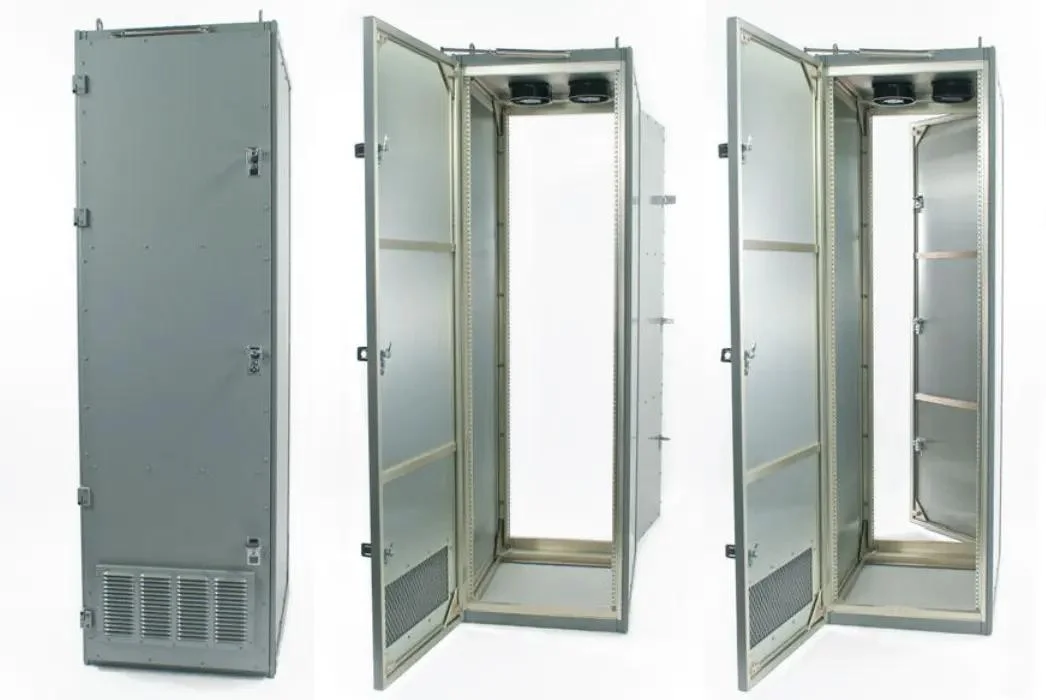
Most indoor and light outdoor use can be done with zinc plating or standard galvanizing at little additional cost. In more difficult environments, appliance housings and cabinets require rust resistance from the outset, and the zinc coating is applied at the mill on a number of grades of galvanized steel. Galvalume, in particular grade AZ150, is a popular choice for outdoor cabinets and equipment that are left outside long term for particularly tough outdoor exposure, as it lasts much longer than standard galvanizing.
Powder coating and paint complete the list, typically selected for appearance as well as protection, but a well-applied powder coat will also provide an additional level of corrosion protection beyond the paint. It’s not about what coating a shop may be running the most; it’s about where the part will be installed.
What a Good Carbon Steel Machining Job Actually Requires

All of this is not difficult on its own, but it does add up. The manufacturer must understand which grade is suitable for the application, sequence the heat treatment so that it doesn’t negate the previous machining processes. They should match the coating to the actual environment of the part rather than using the same coating on everything that goes through the door.
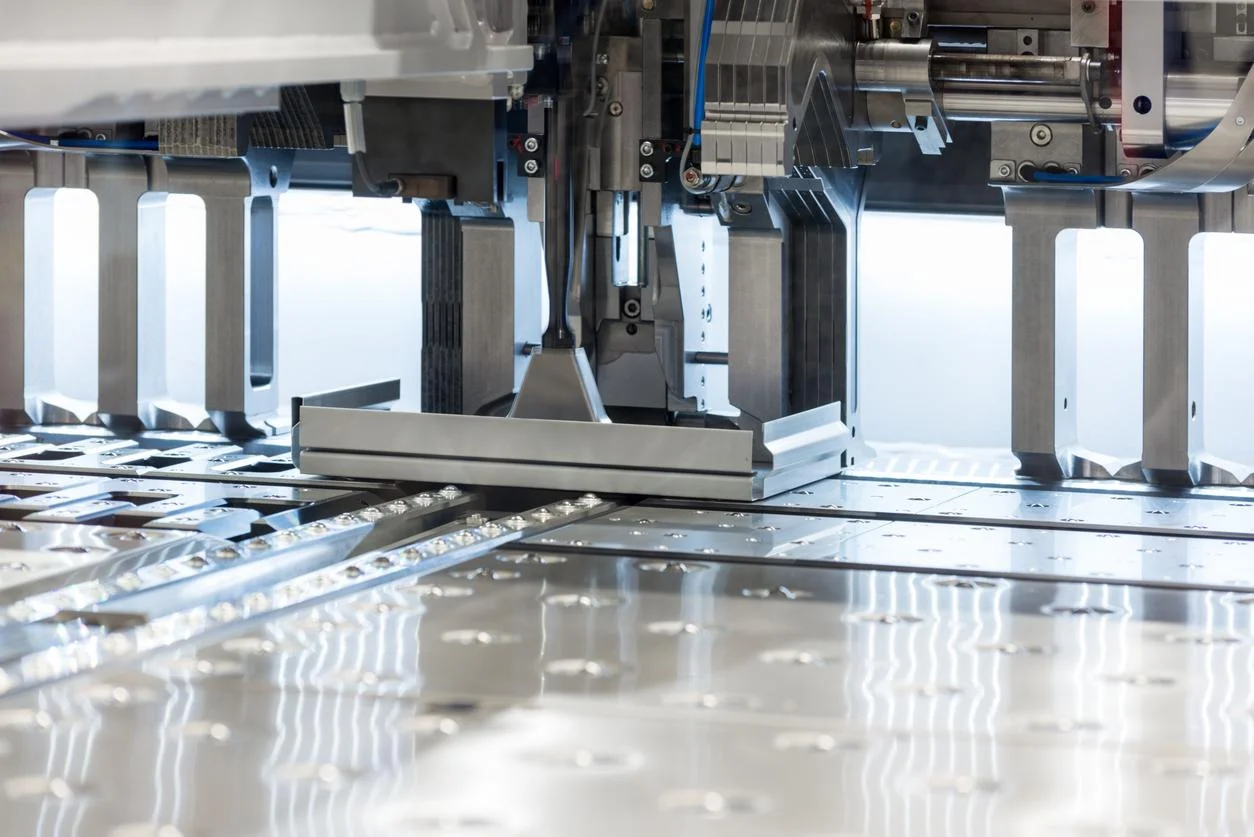
FST 메탈스 can machine carbon steel in various grades, such as cold rolled, hot rolled, medium carbon steel, and can also do CNC 가공 and precision sheet metal fabrication in-house. This is important for projects that require both machined parts and fabricated parts to be made from the same material family and not split the order between two suppliers.
Frequently Asked Questions
What are the common types of carbon steel used in precision machined parts and why?
Grade SPCC is a cold rolled grade suitable for formed and structural parts. Hot rolled grades such as Q345B are suitable for thicker and higher strength parts. In terms of mechanical strength, medium carbon steel, 1045, is the usual choice for shafts and gears.
What are the typical tolerances and surface finishes of high precision steel parts?
Most of the structural dimensions are covered by standard tolerances without problem. Mating surfaces, alignment features, and sliding parts typically require more precision and a finer finish, and they’re more expensive, so consider precision only when it is necessary.
What are the specifications for heat treatment to provide the desired hardness, strength, and dimensional stability after machining?
Quenching and tempering are usually used to achieve HRC 28 to 32 in medium carbon steels such as 1045. Parts are sometimes first machined to near size, heat treated, and finished with a light pass to compensate for dimensional shift.
How can steel parts be best protected from corrosion in humid, outside, or salt exposure applications?
For general use, zinc plating or galvanizing is used. Galvalume is more resistant to extreme outdoor conditions. Powder coating provides protection and a final look where it counts as well.
What is the relationship between part complexity, tolerances, batch size and lead time for custom machined parts?
Simple parts that have standard tolerances are easiest and cheapest to machine. Tight tolerances, complex geometry, and additional processes such as heat treatment or coating increase lead time and cost. More parts typically mean a lower cost per part after the setup is divided among more parts.
What quality inspection and certification is most often required for steel parts in industry and regulated applications?
Most of the structural and general industrial parts require only normal dimensional checks against the drawing. If the application is regulated or safety critical, it may require material certification and a more formal document; it is important to verify that a shop’s process is appropriate for the application.
The Bottom Line
All decisions relating to a carbon steel part can be traced back to what the part is supposed to do in service. The answer to this question dictates the grade, which dictates the tolerance strategy, which dictates whether or not the part needs heat treatment in the process at all, and finally what kind of coating is required to allow the part to survive its environment. Do it in that order, and the rest will fall into place.