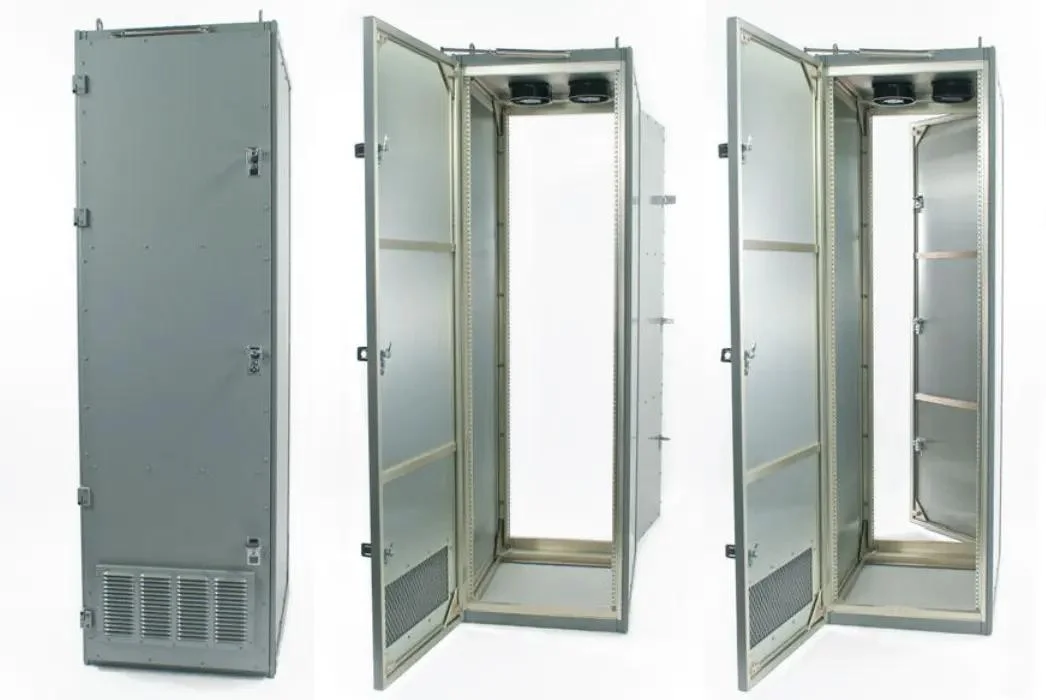
Most EMI shielding issues don’t result from the wrong metal. They result from an unaccounted-for gap, such as a seam that is not overlapped properly, a vent opening that has no honeycomb behind it, fasteners that are too far apart, or an anodized panel that is not conductive exactly where it was supposed to be conductive.
Precision sheet metal enclosures for electronics, telecom, and industrial equipment are a daily part of FST Metals’ business, and EMI/RFI shielding enclosures are no exception. This article explains some of the factors involved in the performance of a shielded enclosure: material selection, finishes that affect or impair conductivity, gasket strategy, ventilation without leakage, and the importance of physical build details more than just the base metal.
Why Seams and Openings Matter More Than the Metal Itself
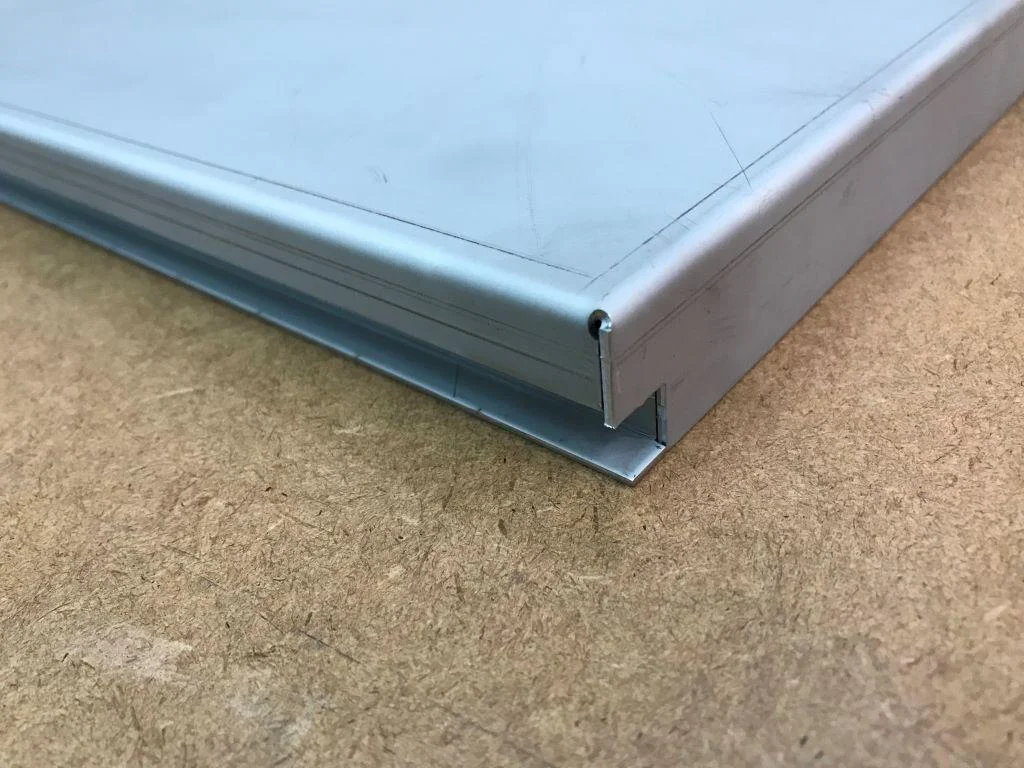
An EMI enclosure is similar to a Faraday cage by creating a continuous conductive surface that reflects and absorbs electromagnetic energy from penetrating through. The word doing the work there is continuity. A solid steel box is highly protective, but even good steel will leak if the seam isn’t tightly overlapped.
The higher the frequency, the tighter the tolerance required. Even a small opening becomes like a slot antenna at high frequencies, and a gap that isn’t electrically continuous at low frequencies will become a leak at higher frequencies. This is why the vast majority of shielding failures occur in the field: unoverlapped seam, ungasketed access panel, and vent cut without shielding behind it. The material spec was pretty good. The assembly wasn’t.
Choosing a Base Material for Shielding Effectiveness and Cost
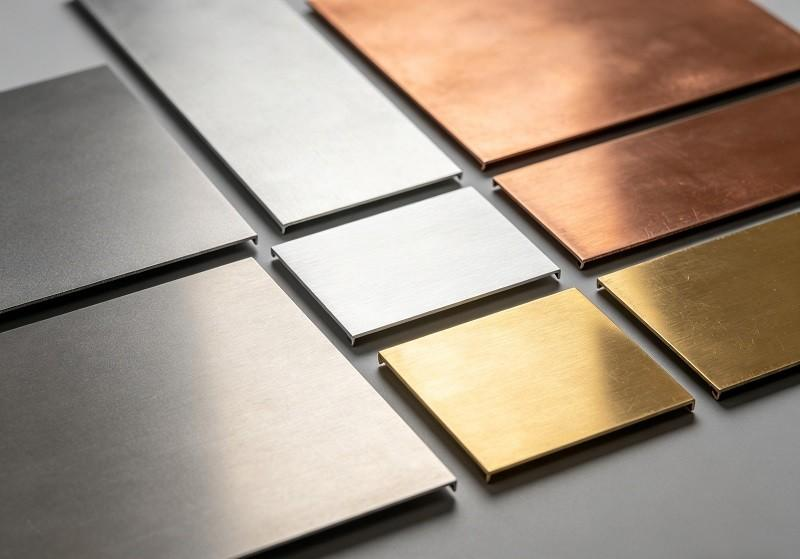
In the realm of shielding enclosures, several material families are available, with the most appropriate one depending on the frequency range, weight limit, environment, and cost.
Cold-rolled steel
A common starting point for enclosures that are not lightweight is to use cold-rolled steel (either SPCC, SPCD, or DC01–DC06). It is cheap to form and actually provides better attenuation of low-frequency magnetic fields than aluminum does. It must be rust-proofed or plated, or else it will rust, and a rusted surface is not a good conductor where contact is needed.
Thép mạ kẽm
Galvanized steel (SECC, SGCC, DX51D) is a reasonable choice for enclosures exposed to humidity or outdoors because the zinc coating provides corrosion resistance. One point to note at the design stage: if the bend radius is too small for the thickness of the zinc coating, the zinc may peel off at the bend lines, and the bare, oxidizing steel will be exposed at the points that are likely to be in direct contact with the seam.
Nhôm
5052-H32 or 6061-T6 is the lightweight alternative and protects well at higher frequencies; however, it is less effective than steel at low-frequency magnetic fields. 5052 is easy to work with and is used for panels and housings, while 6061 is used in structural applications due to its strength. They’re often anodized for color and corrosion resistance. This is an important note that will be expanded in the following section.
Thép không gỉ
When the enclosure is required to withstand corrosion where plating is not enough, used in marine environments, washdown areas, or in outdoor cabinets with extended service lives, stainless steel (304 or 316L) is selected. “Spring-back” (5-8 percent) in forming is significant with 304 and must be taken into account during tooling. For enclosures in coastal or industrial atmospheres, the intergranular corrosion that can occur in welded stainless assemblies can be a problem, with 316L stainless steel resisting it.
Copper and brass
Copper and brass are rarely used in the entire enclosure but will be found in EMI-critical areas: copper (T2 or TU1 grade) for its conductivity in EMI shielding tape applications, in gasket contact areas, and brass (H62/H59) for connector shells and fasteners, where conductivity and machinability are important.
Conductive Finishes That Preserve, or Quietly Kill, Shielding Performance
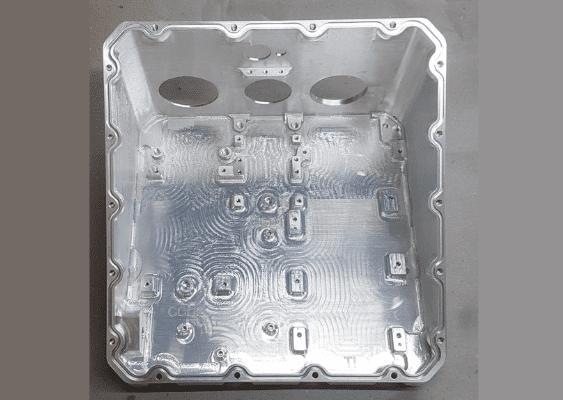
This is where more than material choice gets you wrong. If the surface finish is selected for appearance or general corrosion resistance, it may be electrically insulating and will then provide no shielding effect at that surface, whatever the underlying metal may be.
Anodizing on aluminum
Anodizing is the process applied to aluminum to get a cosmetic finish or to resist general corrosion and forms an oxide layer that is not conductive. The anodized case is exactly the same in appearance as the conductive case and is very different in terms of operation at each seam and mating surface. Contact areas should be masked for anodizing, or a conductive finish (chromate conversion coating) should be specified rather than anodizing where conductivity is required.
Chromate conversion coating
Chromate conversion coating (also known as Alodine) is the preferred finish for providing corrosion protection for contact surfaces of aluminum without sacrificing conductivity, so it’s most commonly used over anodizing.
Zinc, nickel, and tin plating
Steel or copper alloys are typically used for fasteners, gasket contact flanges, and shells for connectors in a shielded assembly and are normally zinc, nickel, and/or tin plated to provide conductivity as well as corrosion protection.
Powder coating
Durability and appearance also dictate the use of powder coating, and it is an insulator as well. If a powder-coated panel must make electrical contact with an adjoining structure, mask off that contact area before coating; otherwise, the finish itself fills the gap.
That covers everything: any surface where two sections of the enclosure must conduct to each other must remain bare metal or be treated with a conductive finish. For purely cosmetic or corrosion-protection areas, it works fine.
Gasket and Contact Strategy: Finger Stock and Conductive Elastomer
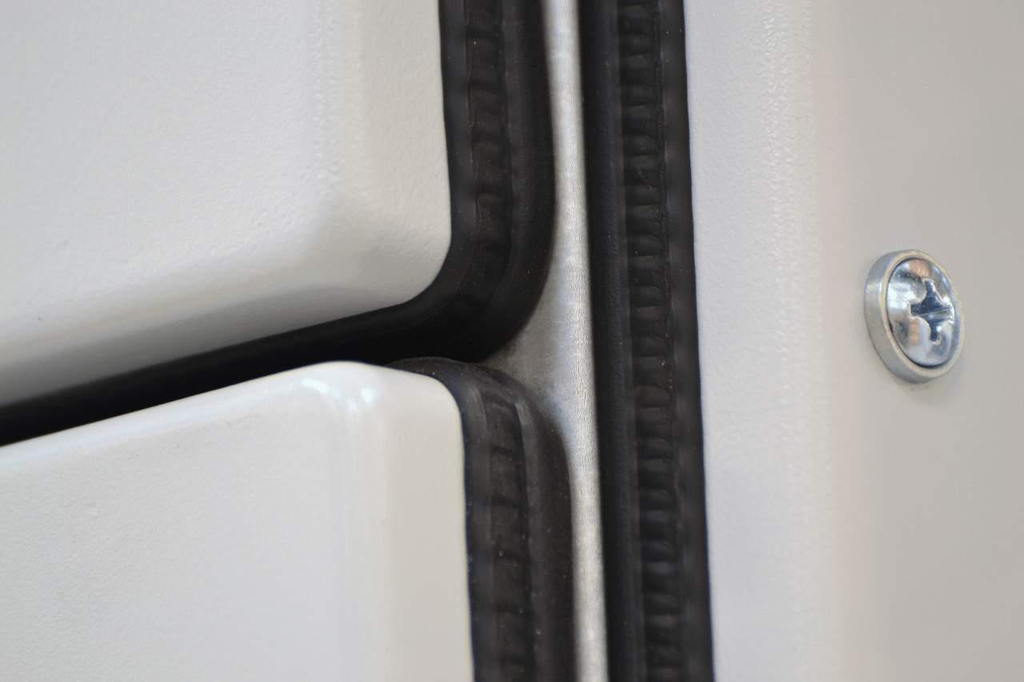
Doors, access panels, and removable covers cannot be welded shut, requiring the use of a gasket that provides continuous electrical contact around the entire perimeter while still being able to open the access panel.
Beryllium copper finger stock
The standard material used for these is beryllium copper finger stock (C17200 grade). The excellent elasticity of the alloy (after age hardening) to approximately HRC 35–40 allows a thin strip of fingers to maintain contact force against a mating surface for thousands of open-close cycles without losing the contact force. This makes it well suited to doors and panels that open frequently during service, rather than being tightly closed once and left alone.
Conductive elastomer gaskets
Conductive elastomer gaskets (silicone loaded with conductive particles such as silver-aluminum or nickel-graphite) provide a soft and compressible seal that also provides environmental sealing against dust and moisture in addition to providing EMI sealing. These work well in enclosures that require an environmental seal and an EMI seal at the same connection and cost somewhat more than finger stock.
It’s important to remember that the gasket can only function when the surface it is pressing against is conductive, as this is directly connected to the finishing point listed above. Even the perfect finger-stock gasket installed on an unmasked, anodized aluminum flange will leak, since there is nothing conductive to be pressed against the gasket.
Ventilation Without Losing Shielding
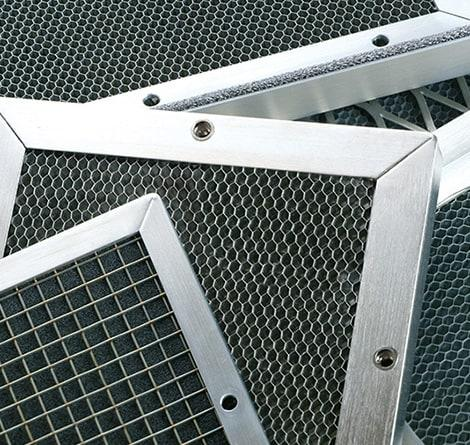
A closed box will retain the heat from electronics in a shielded enclosure. The solution to the heat problem is a plain ventilation hole, which will destroy the shielding at the hole because it is just a gap at whatever frequency the size of the hole is.
Honeycomb waveguide vents: This is solved by using the waveguide-beyond-cutoff principle, which is a planar grid of small hexagonal cells that is deep enough that the ratio of cell depth to cell width is great enough that air can flow through the structure freely, while the electromagnetic energy above a certain frequency is blocked. These are generally made of aluminum, steel, or brass and usually include a built-in conductive gasket around the panel perimeter, since the perimeter can be as dangerous as the holes in the vent assembly.
For those who specify a shielded enclosure: Any hole in the enclosure, where air must pass, or where cables must run, or where a display is to be placed, will require its own shield, not just a hole and a hope.
Seam Overlap and Fastener Spacing
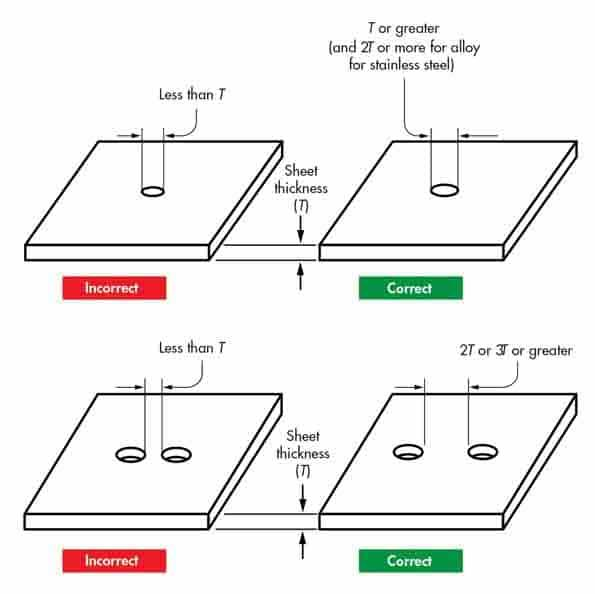
Material is only part of the story; two structural details also dictate attenuation performance, and they are also decided at the drawing board, not at the end of the enclosure.
Seam overlap length. The longer the overlap at a folded or welded seam, the more it will resemble continuous metal rather than two separate pieces joined at a line. Typical design guidelines for shielded enclosure work overlap at structural seams of 1″ or more, depending on the frequency range the enclosure is required to attenuate.
Fastener spacing. If there is no continuous weld between panels but instead only fastened with screws, the space between the fasteners acts as a small slot antenna at high frequency. This leakage decreases with the closer the fasteners are together, but a panel with fasteners every 6″ is different at high frequency than a panel with fasteners every 2″, even if the material and design are otherwise the same.
These details are easy to get right in the design phase and difficult to correct once the structure is fabricated, as it typically requires adding welds or fasteners to the structure that the design did not anticipate.
How FST Metals Builds a Shielded Enclosure
The fabrication sequence mirrors the normal sheet metal process done by Kim loại FST but adds a few decisions made for EMI.
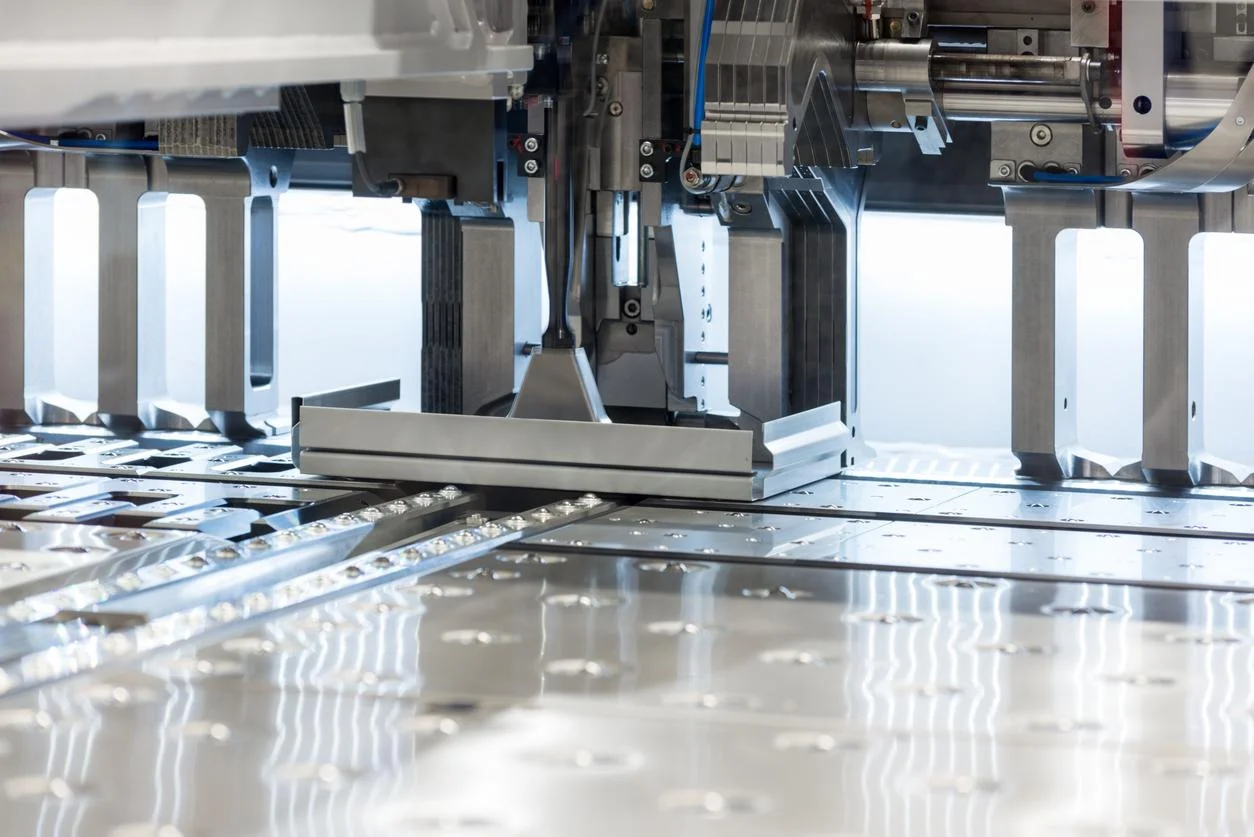
Consistent panel dimensions lead to consistent gasket compression, because inconsistent panel dimensions are converted directly to inconsistent gasket compression. Panels are laser cut and CNC formed to the tolerances required to ensure consistent seam overlap and gasket contact. Use welded seams where continuous shielding is the most important (where assembly is not required to be serviceable) and fastened or gasketed seams where doors, access panels, and anywhere the enclosure is required to open. Cosmetic finishes are selected and applied at contact surfaces that are determined at design review, excluding other areas of the enclosure which do not affect the shielding at the contact surfaces. All hardware, gaskets, and vent panels are built into the assembly, not left to the customer to add.
Kim loại FST has its own laser cutting, CNC forming, and CNC machining equipment to ensure material selection, forming tolerances, and finish masking are kept in sync, instead of being handed over to different vendors with no communication between them on which surfaces must remain conductive or not.
What to Send When Requesting a Quote
These are specified ahead of time, and a quote for an EMI enclosure is returned faster and more accurately:
- The frequency range that the enclosure must protect from or comply with (FCC, CE, MIL-STD-461, or equivalent)
- Whether the enclosure must be serviceable (doors, access panels, etc.) or is to be a completely enclosed, welded enclosure
- For ventilation, requirements such as expected heat load, if known.
- Cable and connector penetrations and their locations
- Exposure to the environment (indoor, outdoor, washdown, coastal)
- Overall dimensions and known opening locations (even rough) in the form of a drawing or 3D model.
Frequently Asked Questions
Is anodized aluminum good for EMI shielding enclosures?
Not at contact surfaces. Those surfaces that require electrical contact with other surfaces of the enclosure must be masked during anodizing or coated with a conductive finishing material such as chromate conversion.
What is the difference between finger stock and conductive elastomer gaskets?
Reliable, repeatable spring contact for panels that open and close frequently is provided by beryllium copper finger stock. For outdoor or washdown enclosures, conductive elastomer gaskets are both softer and capable of EMI and environmental sealing at the same joint.
Can I have a vent hole in a shielded enclosure?
Yes, through a honeycomb waveguide vent panel rather than an open hole, and the honeycomb cell geometry restricts electromagnetic energy above a specific frequency while still allowing airflow.
When the material provides good protection, why is fastener spacing important?
Open spaces in a seam are small slot antennas at high frequencies. The tighter the spacing, the better the gaps close and the better the attenuation, regardless of the base material’s own shielding.
What should be used for a cabinet for an outdoor location that will be shielded?
Typically, galvanized steel or 316L stainless steel is used for outdoor exposure; we pay special attention to bend radius on galvanized parts to ensure no damage to the zinc coating at bends.
Let’s take the first step.
The entire assembly determines the level of shielding, not the metal listed on the spec sheet. The final result often depends on factors such as seam overlap, fastener spacing, finish on the surfaces that contact the enclosure, and gasket strategy.
The material and finish choices are all coordinated from design to assembly with the use of FST Metals’ in-house laser cutting, CNC forming, and finishing operations, which provide EMI/RFI shielding enclosures. The best way to receive an accurate quote is to send the frequency range or compliance standard that the enclosure must meet, as well as known openings and access.